
“Why are Highland Cows so fluffy?”
5 Fun Facts About Highland Cows That Will Make You Love Them Even More.
Its large, very hairy and you can’t see its eyes, don’t panic ! it’s just a fluffy highland cow come to check you out.
The fact that I had a bucket of feed as well as a sketch pad under my arm made me very interesting to a local herd of Highland Cows recently. I entered their field ready to get down to work sketching for a new highland cow tea towel design, only to find that large horns at close quarters, inquisitiveness of my sketchpad and demanding to be brushed by said Coos changed my plans.
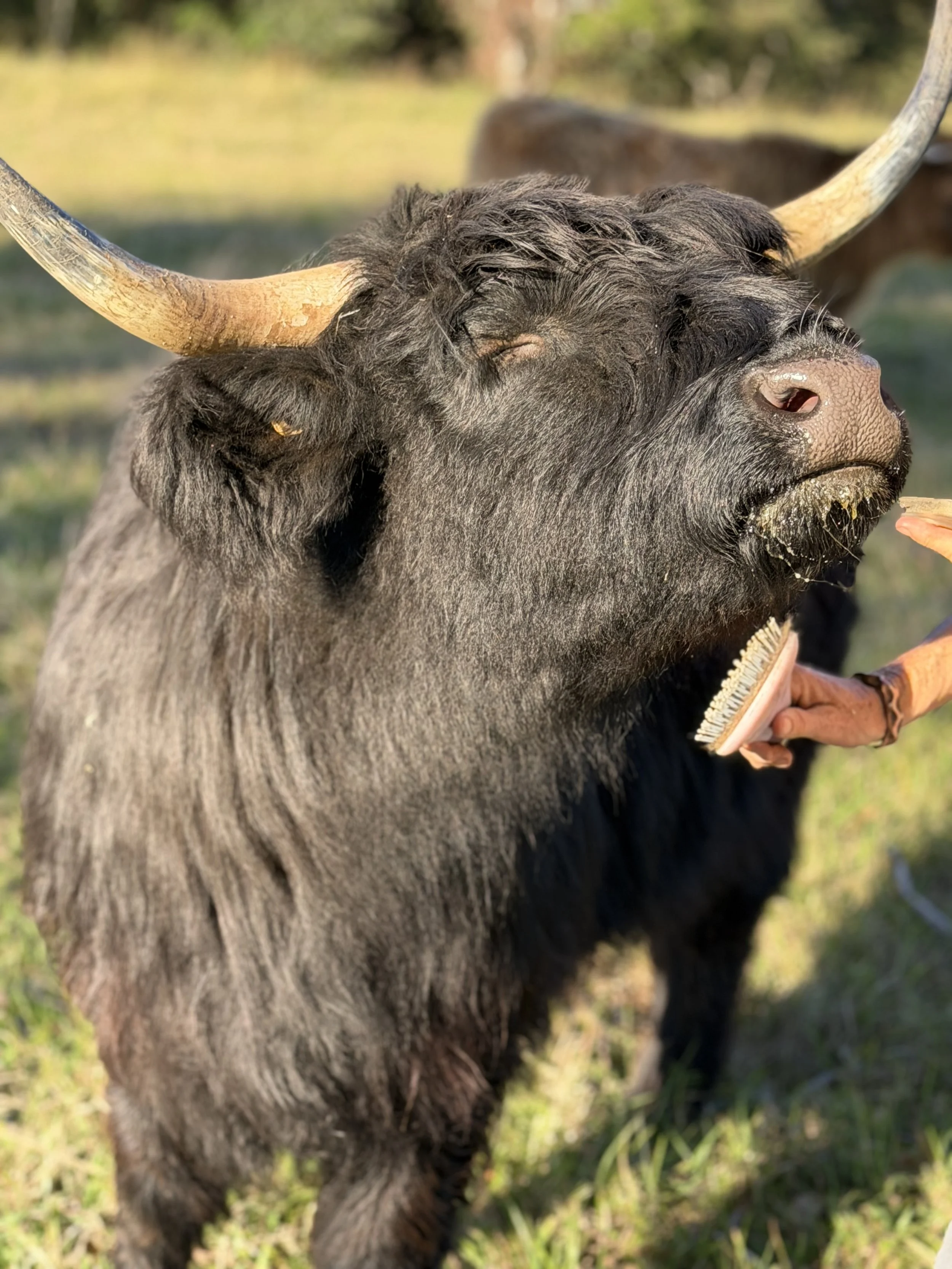
“But it gets better” as the owner of the hairy Fold ( that is what a group of Highland Cows is officially called (Fact 1) reeled off some quirky info about her brood.
“Here is the crazy part”, They wear a built in raincoat provided by their shaggy hair which has a double layer. The undercoat is soft and downy to trap in heat while the outer coat consists of long oily hairs that repel rain and snow (fact 2) The long bangs that cover their eyes may be a hairdressers nightmare but they keep the flies and pests out of their eyes and protect them from harsh, driving winds, rain and snow when in the Scottish Highlands (fact 3)
“More crazy but true” You can tell their sex by looking at their horns, even though they may look identical from the neck up.
Boys (Bulls) horns grow forward and have a slight downward curve as they age, also being much thicker at the base.
Girls (Cows) horns are longer, finer and sweep dramatically upwards.(fact 4)
“and the most quirky fact I have for you” Queen Victoria preferred reddish-brown coloured cows to black so the breeders began selectively breeding the red coat which is now the most dominant colour seen today. (fact 5)
“Bonus fact that is my fav” they are secret eco-heroes (saving ecosystems)
Unlike other heavy livestock that trample and destroy land, Highland cows are highly prized for "conservation grazing." Because they are large but remarkably gentle foragers, they eat tough, invasive plants like bracken, thistles, and coarse gorse that other cattle reject. As they clear this dense overgrowth with their tongues and teeth, they allow light to reach the soil, promoting the growth of delicate wild flowers and creating the perfect nesting habitats for birds and small mammals. They are also the oldest registered breed of cattle on Earth, first documented about in 1885.